Thinking Like a Photographer in the Garden
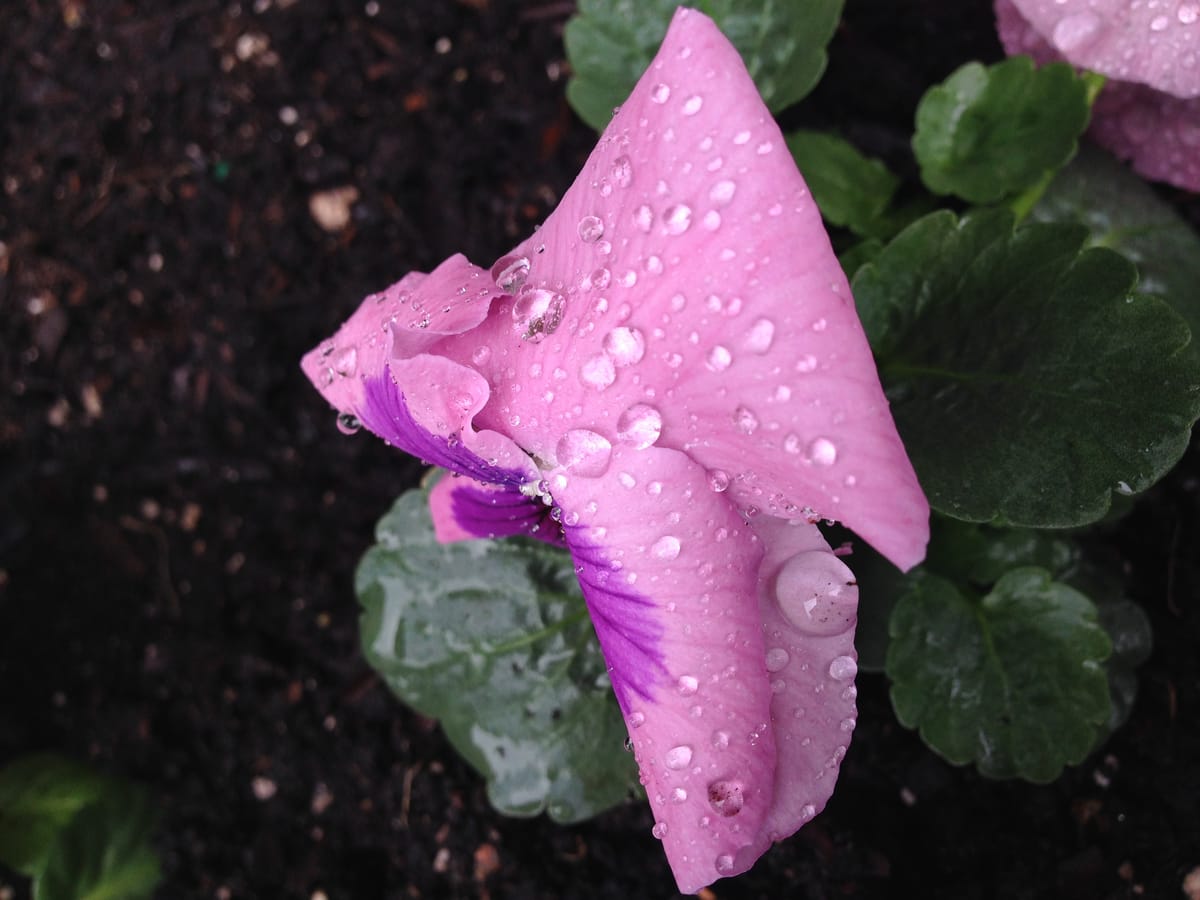
I'm going to be using a rather simple set of subjects today. It's a rainy day, quite stormy. I'm coming out here and noticing that the garden decorations, the dried-up vines that are just barely coming back to life, and all of these freshly planted flowers look beautiful with the rain.
While we don't have gold in our light, the light is rather diffuse and bright because we've got cloud cover all across. Let's see what happens if we maybe think about the intersection between man-made and natural.
To challenge myself, I'm going to be using this ancient iPhone 5 I found down in my office. It doesn't even support the usual swipes. Single lens. Very basic. Why am I using this old-fashioned phone that obviously probably will barely even hold the charge for the amount of time I need to take these pictures?
Because it strips us down to the actual essence of visual composition.
The Rust and the Vines
As I crouch down to compose my first photo, I'm noticing the bold circular shapes in contrast with the strong lines of fines. Let's see what we can do to feature one or the other.
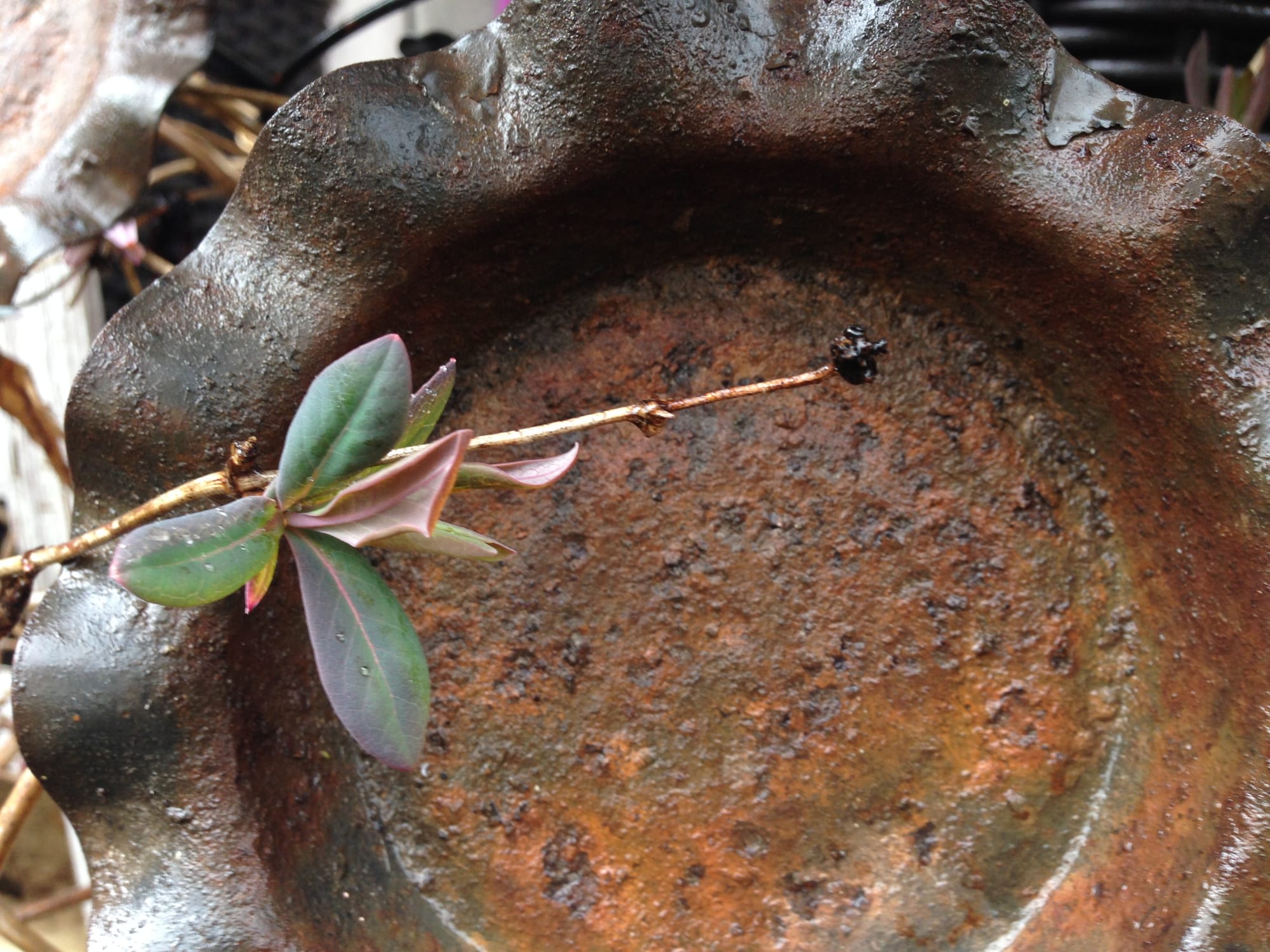
We'll begin with a few pictures where I really try to highlight the shape and texture of these decorations. This is supposed to be a planter holder when it stands upright, but as it lays down here in preparation for there being strong winds, it looks really cool, especially where I can see a contrast between these freshly budding leaves and that strong rust texture. How much I choose to leave of the background or how tightly in I focus on the leaves, vines, and rusted planter... that's up to me to decide, even though I have only a very basic camera.
When you have such a flat background it can be challenging. To push myself, I will take a look at this flat surface of the planter and I'm going to try and really explore the texture of the rust.
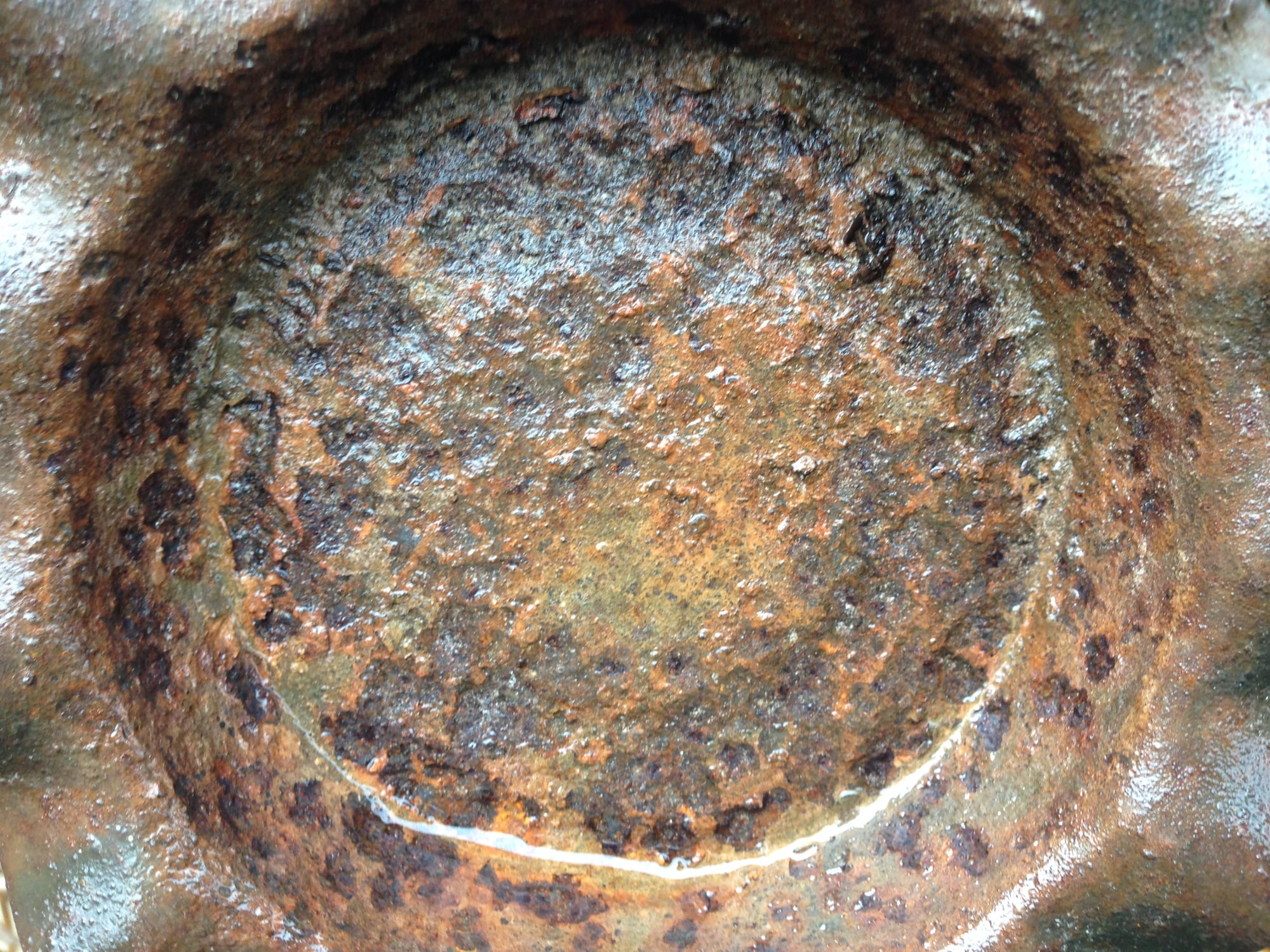
With very limited focus options, I have to decide with the actual distance from my subject to my lens kind of how much zoom, how much focus. With this older low-resolution camera, I don't have any room for cropping. If I really want to show off the texture, I might find that catching a bit of the rim, and perhaps even showing some of the grass down below, some of the fresh budding plants, that can give me an engaging photo.
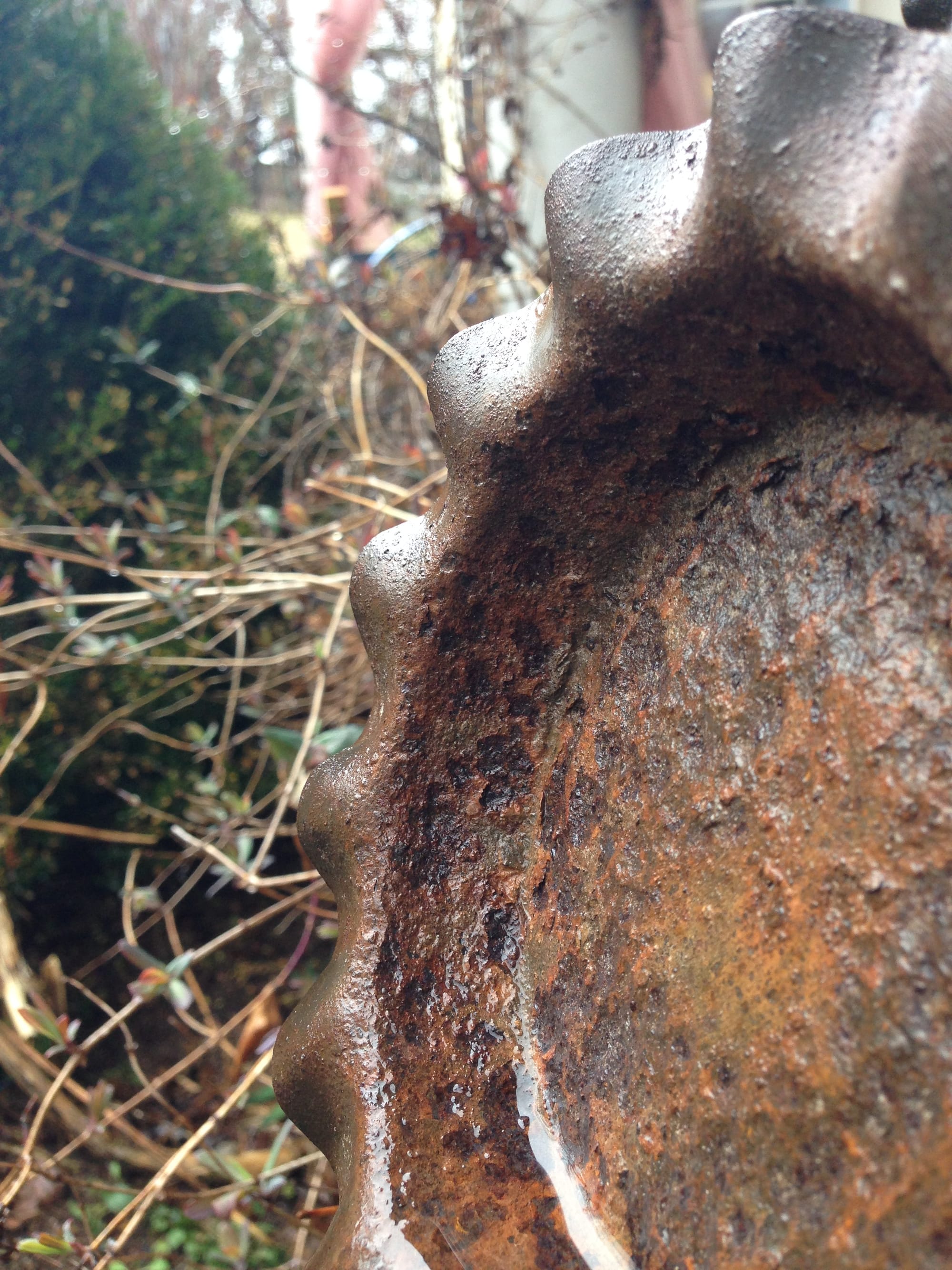
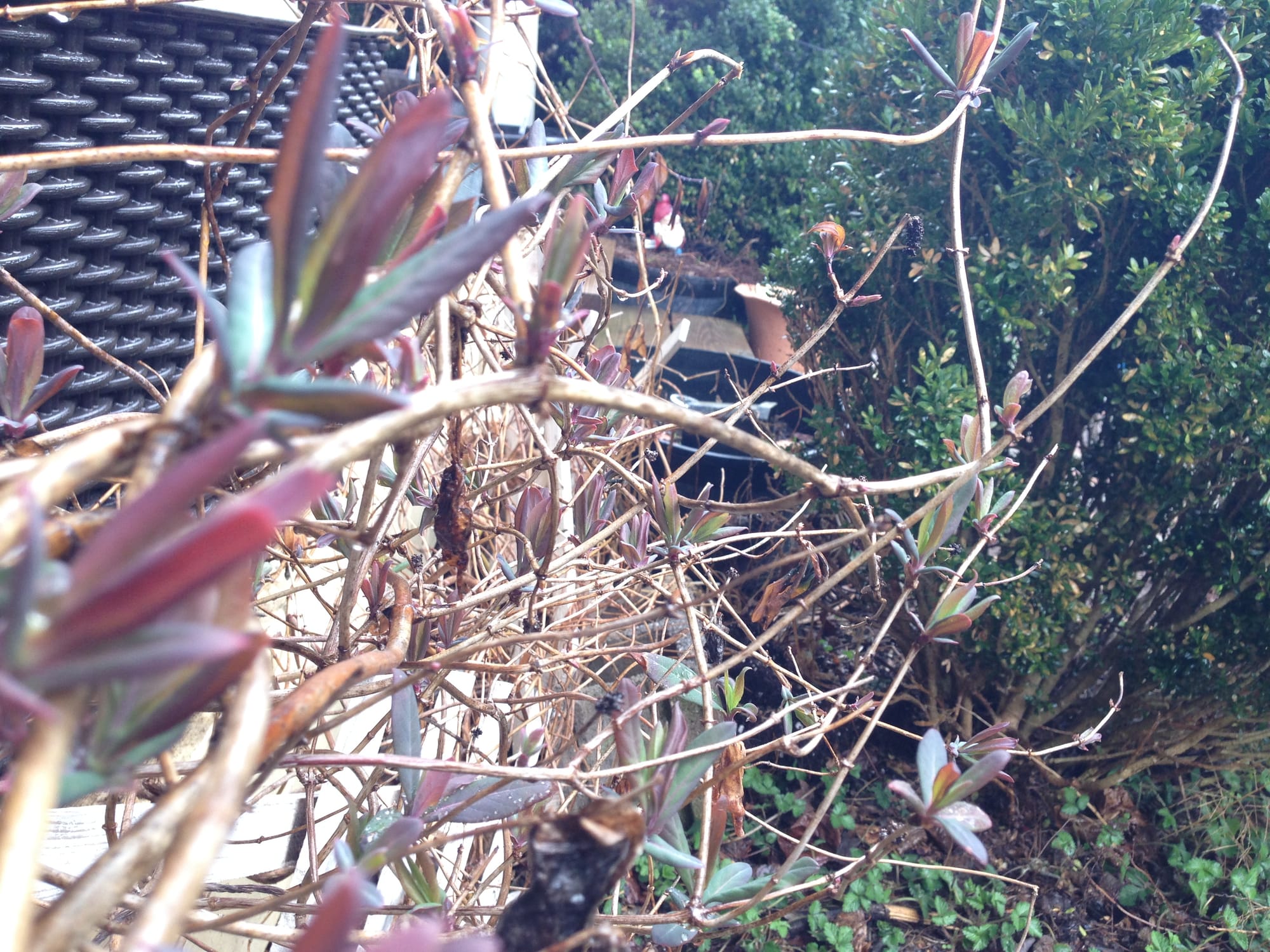
I'm especially curious what happens if, after doing so many photos of a flat subject, what if I let those wrinkled edges become important? And what if we bring some of the depth of these vines into the photo, especially with how they hold the water drops right here?
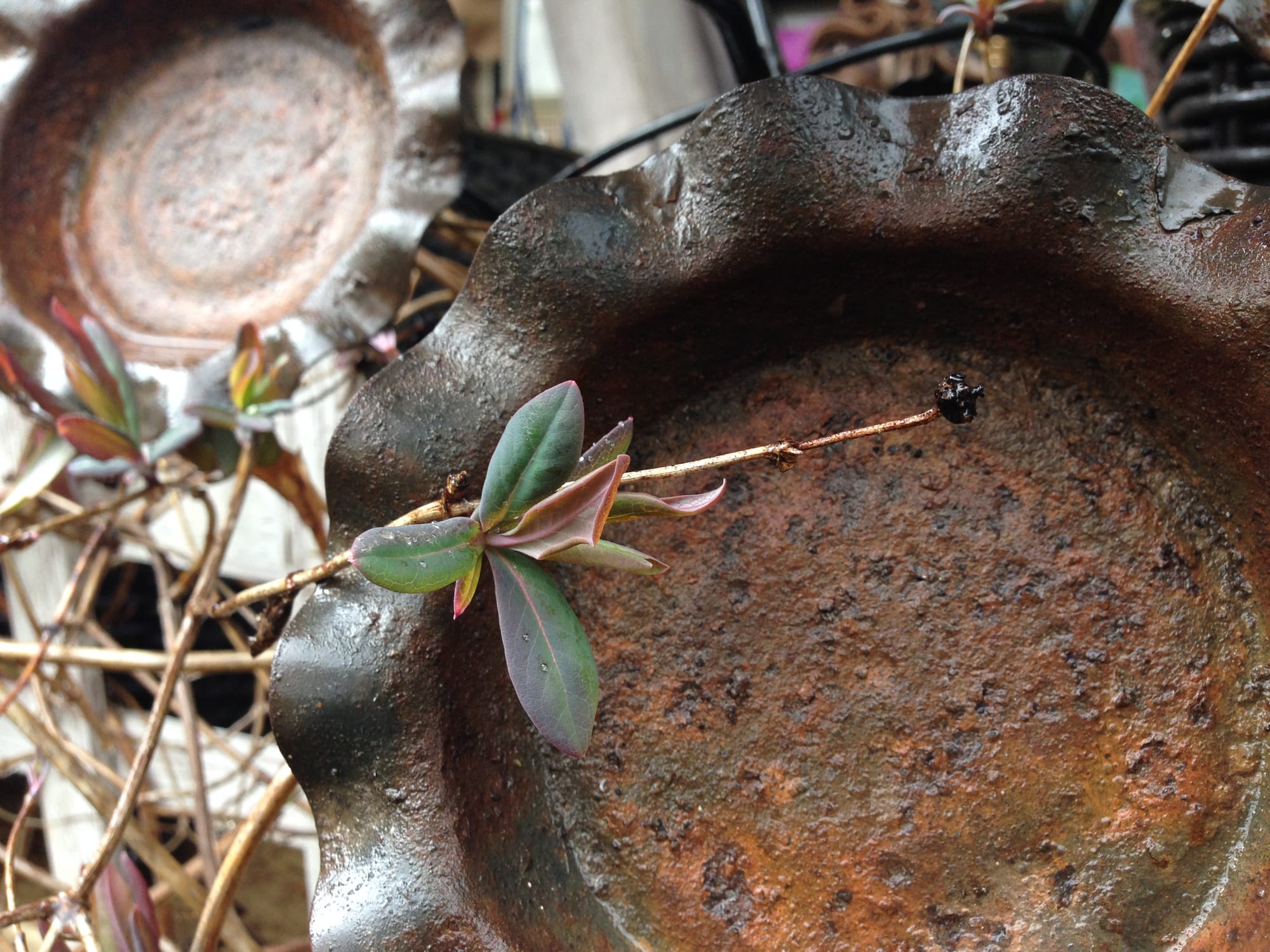
Trying to make sure that I place my subject at a distance where it grabs attention but doesn't completely fill the frame.
Right here I've got a beautiful configuration of water drops that if I had a macro lens I could really capture beautifully, but we are trying to work with the tools we have and more think about our photography than rely on technology. I'm going to get as close as my lens will allow. And that working distance is a good bit further than most modern phones.
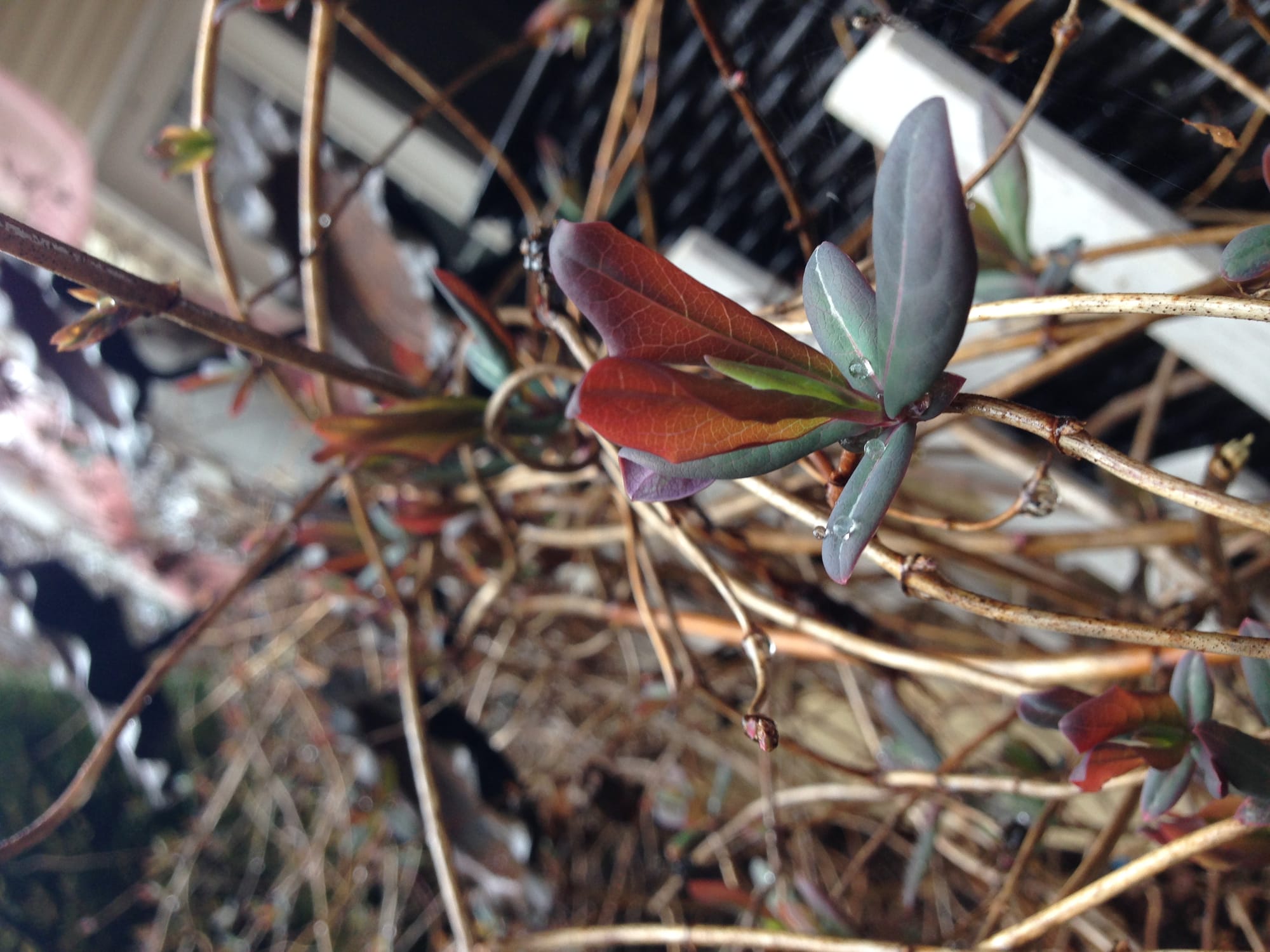
But by contrasting the texture in the background with the arcs and leading lines of the branches and vines, I think I'm actually capturing some really fun photos of these water droplets.
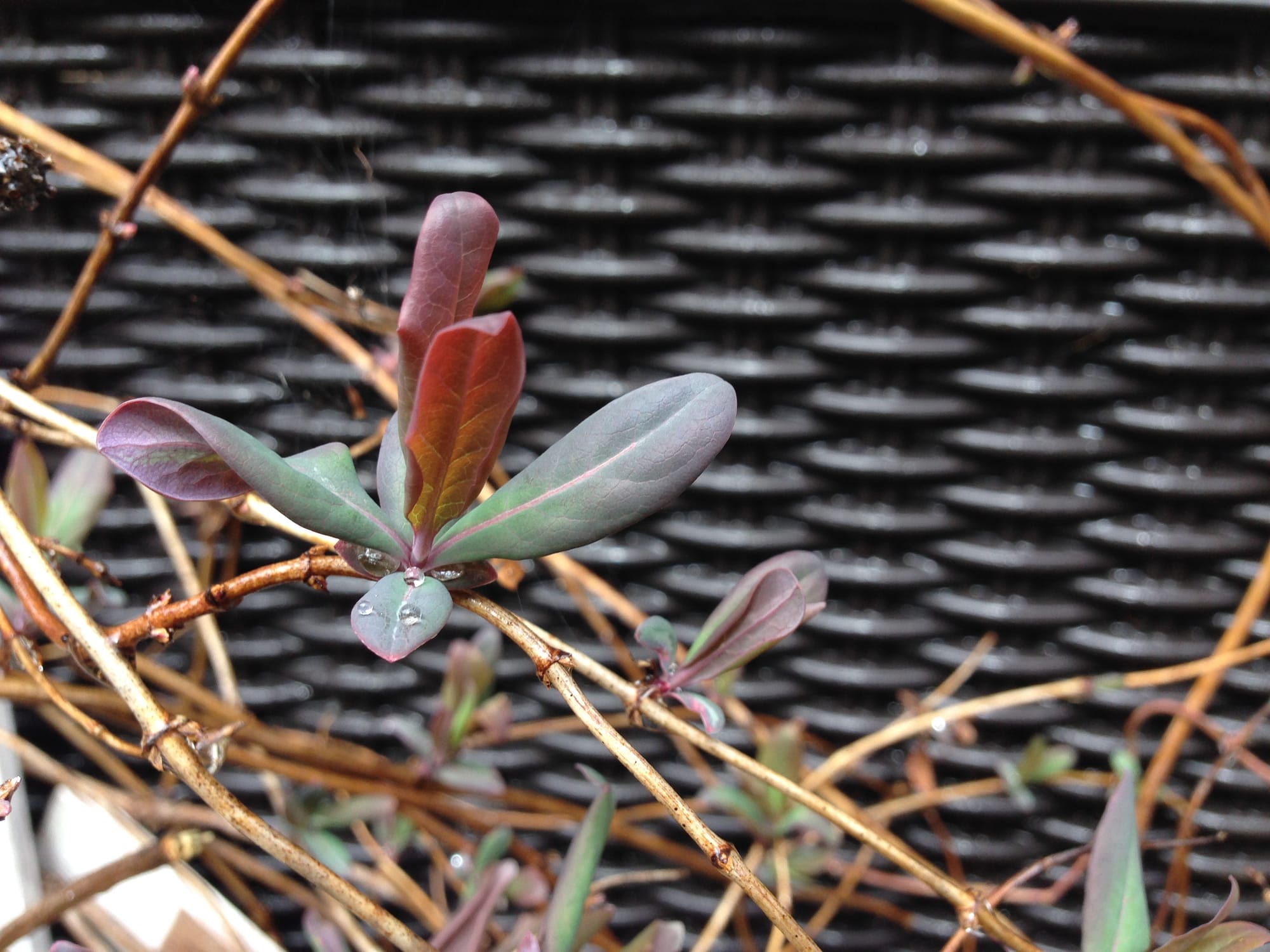
The most challenging aspect has been figuring out my working distance with such a basic lens, without having any zoom function at all. I'm having to stay about six to eight inches away, and occasionally I lock my focus so that I can move the camera around without autofocus jumping all over the place. I'm actually pretty happy with those photos.
The Flowers
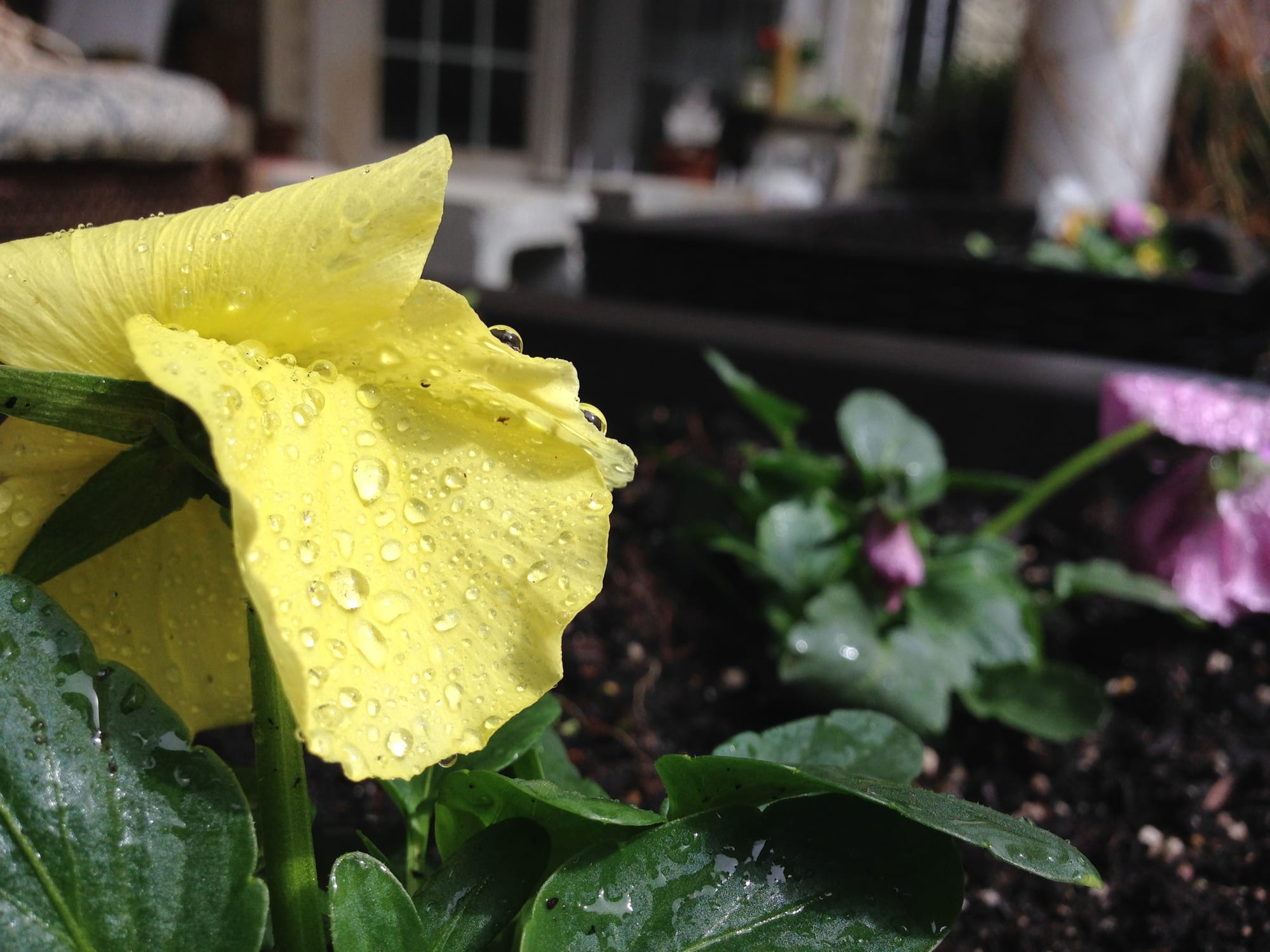
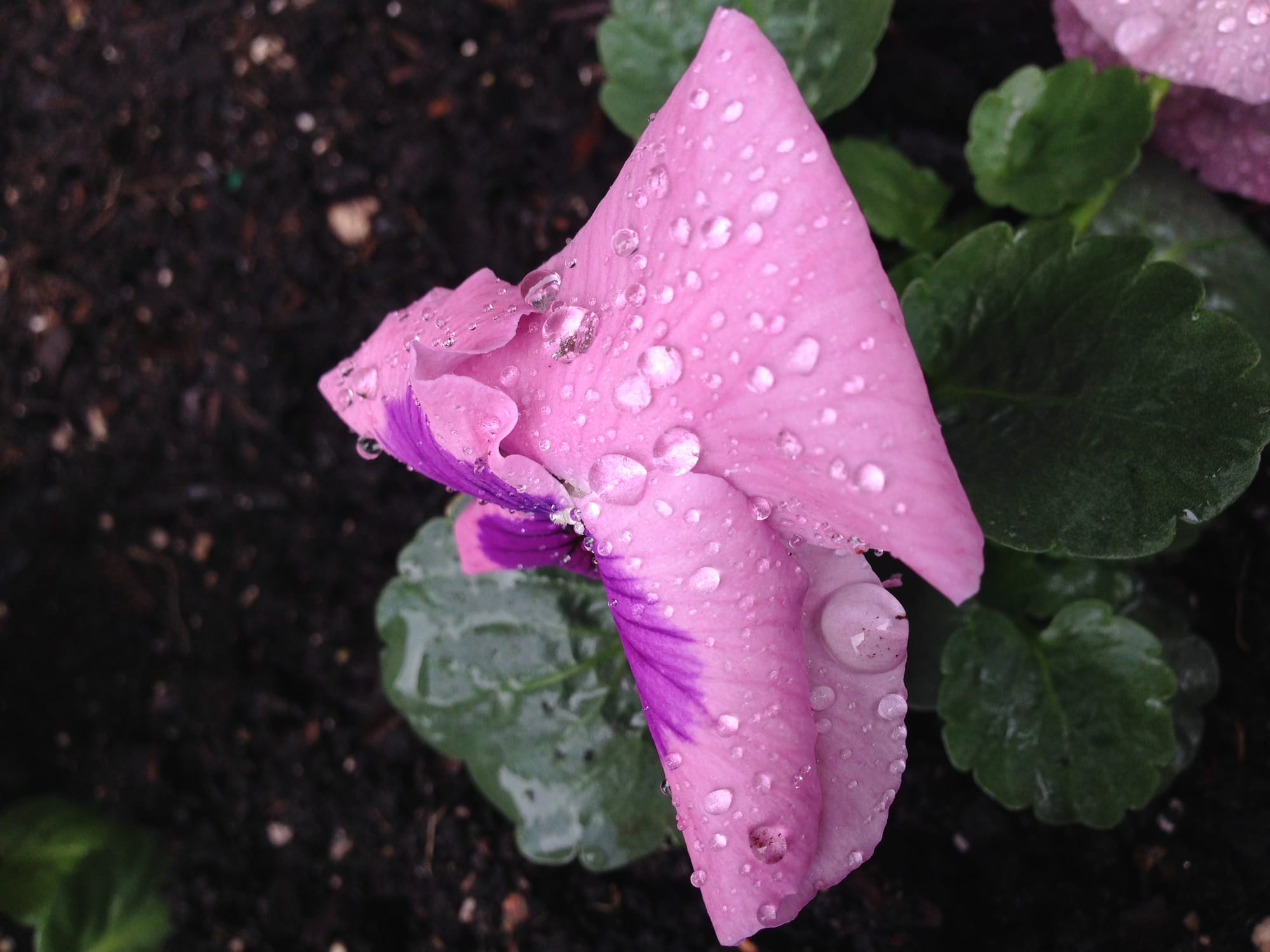
I want to get some photos of these wonderful freshly planted flowers. The folds of these flowers appeal to me. Now we have multiple lines that curve around themselves and fold over other petals, and many water droplets on this side. Let's see what I can get.
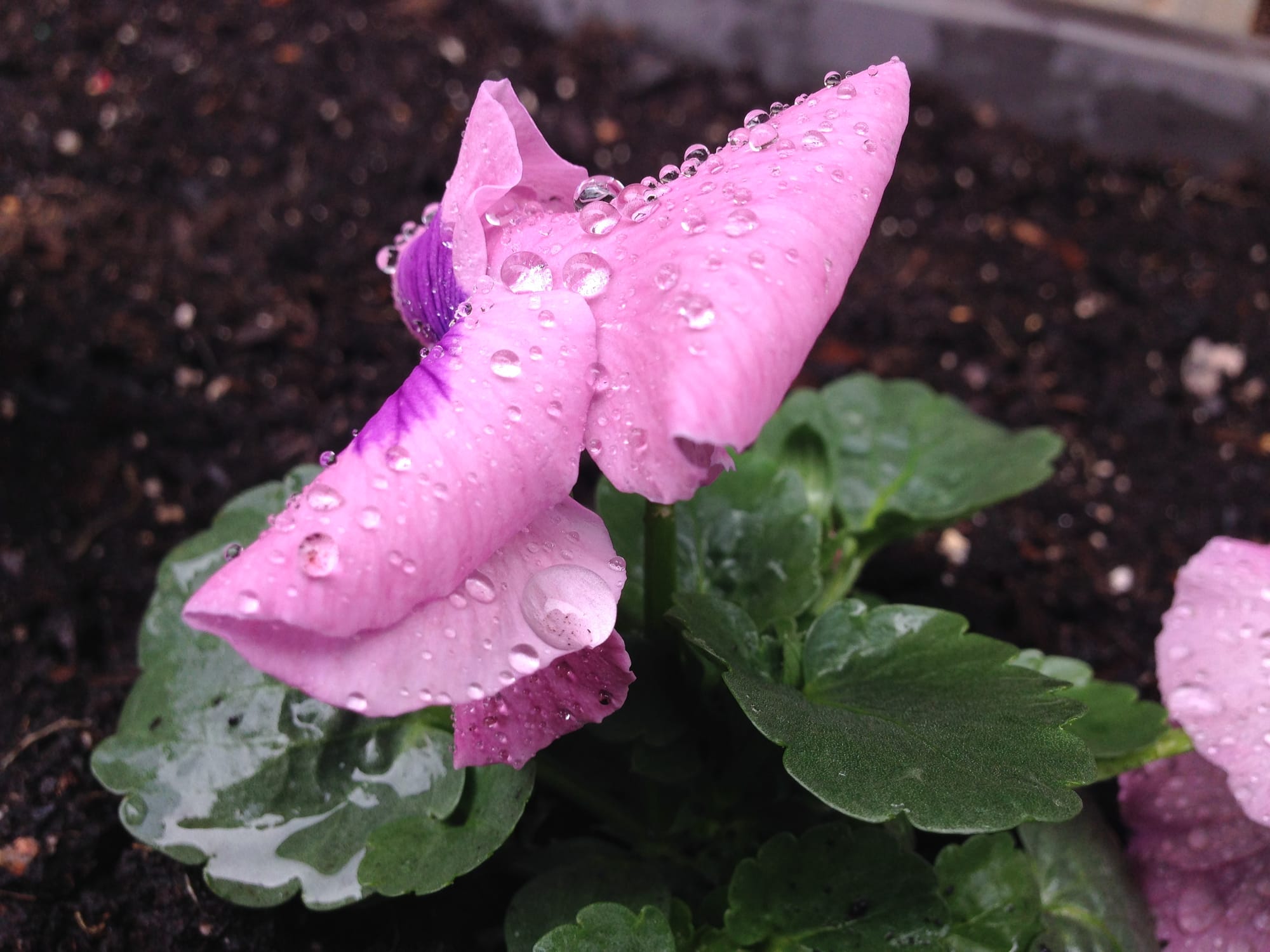
I'm thinking very carefully about where I put my background, because I do have a bit of a busy background in the porch and all the things we've moved away from the storm. Now my shadow is getting in the way some, but because we have such diffuse light today, I'm actually able to capture some really lovely shots where my shadow doesn't so much matter because of the diffuse light of this cloudy day.
Focus Lock and Exposure Control
As I switch to photographing the flowers, I'm being very careful to make sure that I follow my rule of thirds in terms of where I put my focus point. By locking my focus instead of letting autofocus run all the time, I can get several shots in a row that really feature the reflections of the water drops. Autofocus on this phone is also running auto exposure and I don't want the auto exposure to be constantly shifting. I want to choose my exposure by pressing, sliding that little sun up and down, and then holding to lock, because that really helps with the color definition, especially on an older phone like this one, where its color reproduction is already struggling a little bit.
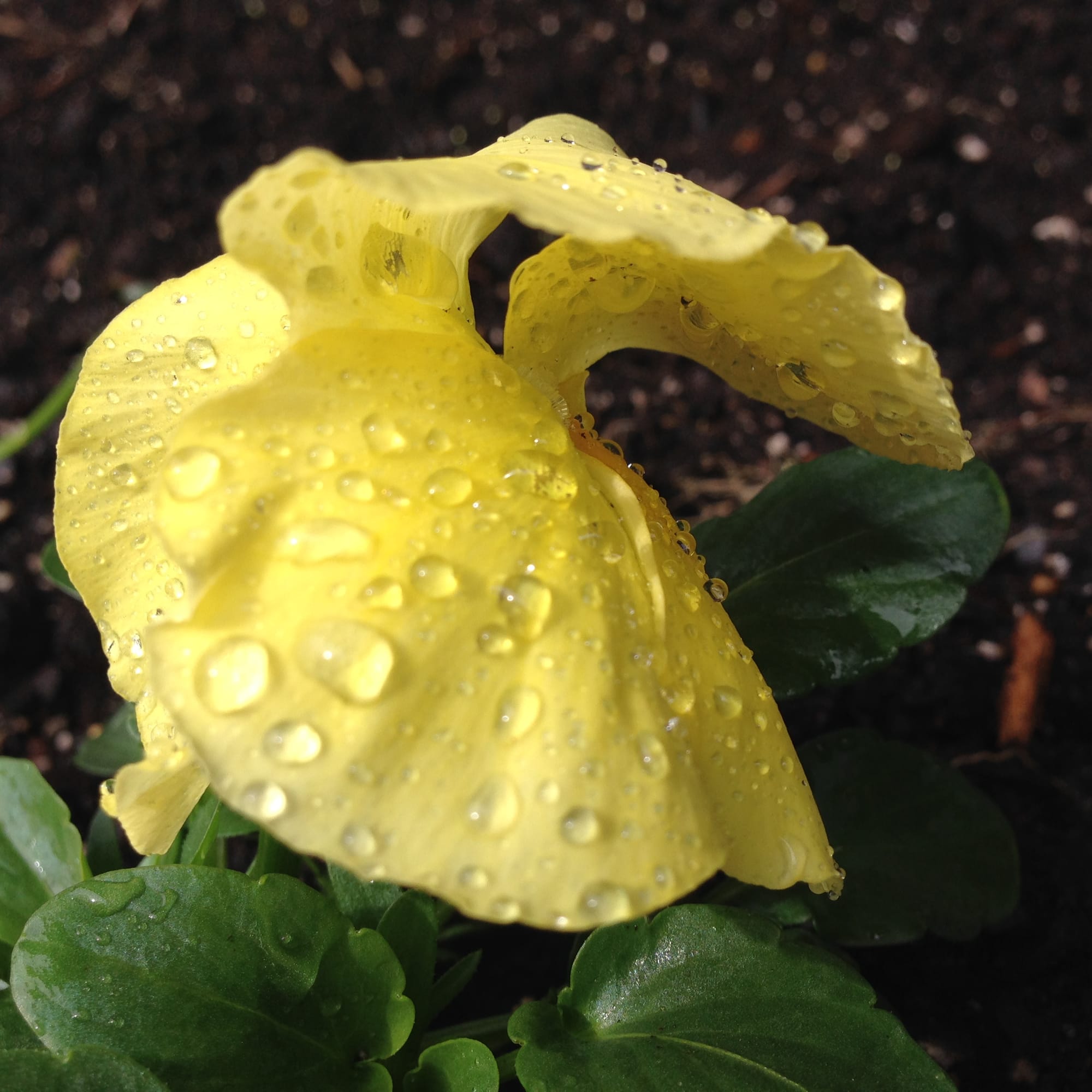
Here I would really like to get a nice view of the different colors in this flower. It's a bit of a flat face, kind of like when we were dealing with this planter, but I think that if I approach it from a different angle — perhaps right here — I like this angle because I'm getting a leading path of all of the lines in the flower, all of its veins, and all of these little water drops all over it, and I just get a hint of the different color on the face.
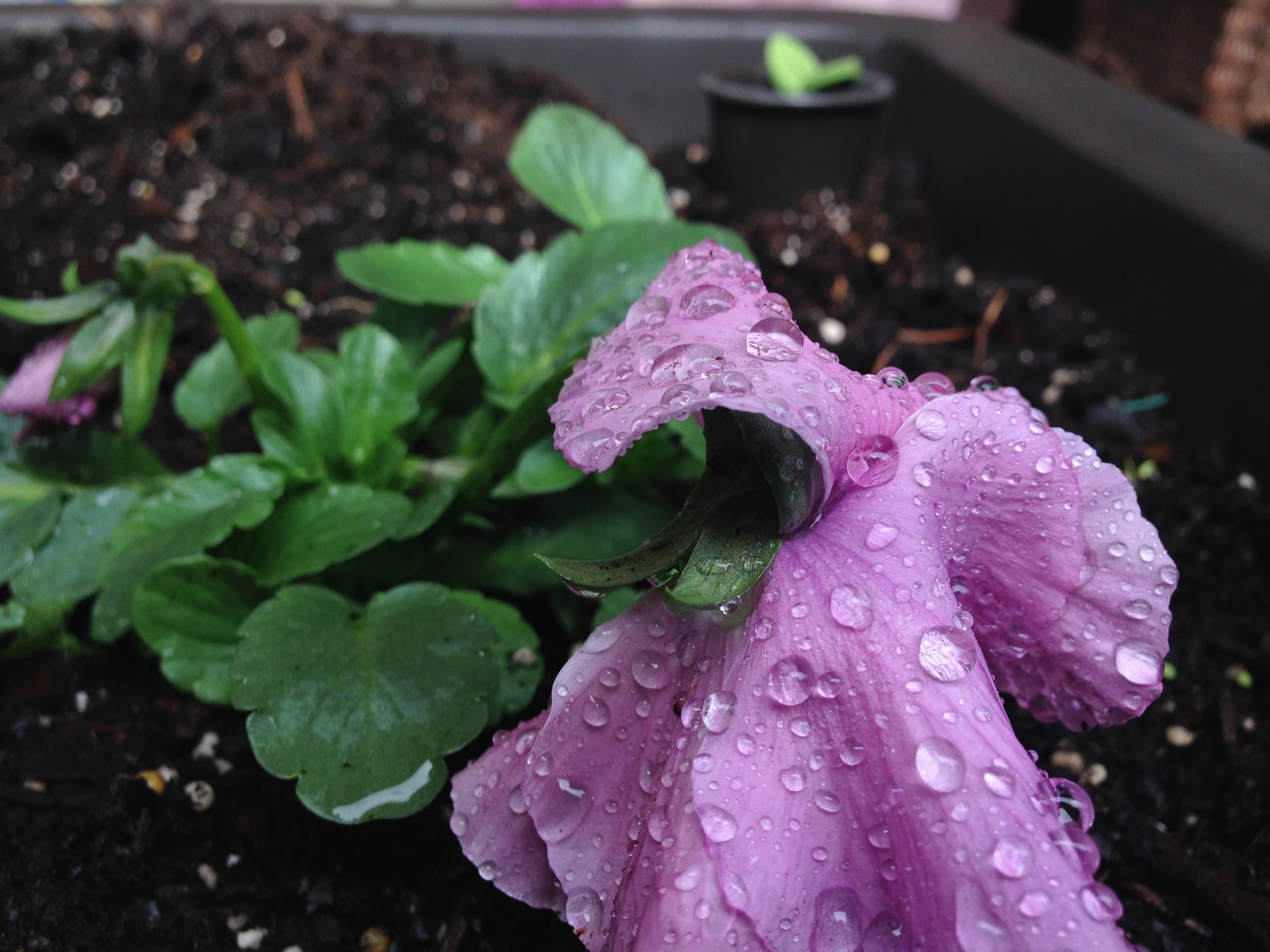
And as I explore the flower's shape, I'm making sure I keep an eye on my background. I'm trying to line up a part of the flower — at least one curve or one color shift or one petal that lays atop another. I'm trying to line those up with my rule of thirds guides and also with the background so that I don't lose too much of the texture. Because I don't want to have a big distracting background.
Foreground, Subject, Background
Since I'm using a very basic camera, have to thinking carefully about my composition. Where do I want to put the parts of the photo that are in focus? Do I want them to be near my rule of thirds line? Do I want them to be centered? Do I want them to be at the very edge? And I've been thinking about my light. Do I want to be able to see into the shadows? Or do I want them to feel especially deep?
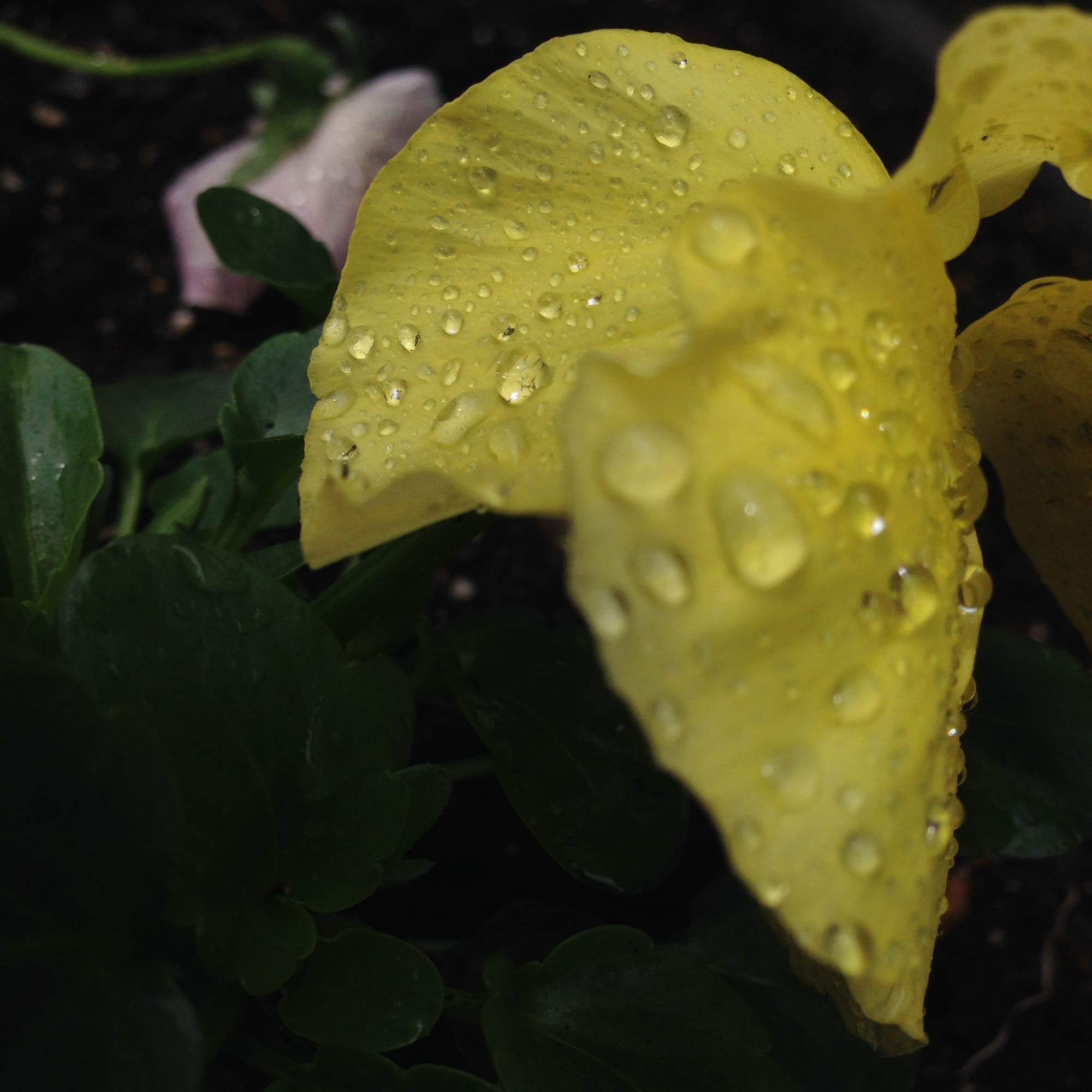
If we focus a little beyond the flower and maybe try and capture some of the texture of the dirt, that can give us the opportunity to build a kind of blurry foreground. Or alternatively, we could focus on the flower, featuring one or two of these water drops while letting both the background and the edge of the leaf fade out of focus.
Review
Let's review.
- We're using a very basic camera.
- We're using our composition grid.
- Leading lines pull our eyes from the edge of the photo to the center, or from one of the points on the grid to another.
- Especially when we're using a really simple camera, you have to be thinking about the layers of subject, how your blurry foreground leads to that subject, and then how your blurry background leads away.
When you're using a really fancy camera with a really big lens and you're zooming in, it's the same kind of challenge, but you have more tools to work with. You can become overly technical with using those big lenses or a those triple or quadruple lens arrays on the back of phones now.
But it all comes down to the thought process.
To saying, "Hey, I like those water droplets," or "I like those vines," or "I like that rust."
How can I show off this thing that I really like and use the rest of the canvas of my photo to draw my viewer's attention to it, whether I have basic control or lots and lots of control and fiddly details.
The Assignment
This one is one of those more abstract guides. I'm not asking you to necessarily come up with a particular style of photo. I happen to be taking garden photos today, but what I'm mainly asking you to do is think about why you're capturing your pictures. Think about how you're arranging the components.
And as you heard me trying to narrate my process in the video, I know it got a little disjointed. Sometimes I kind of broke off sentences partway because I was thinking or struggling with something in the moment.
And that's intentional.
While you are taking pictures, you should be having those similar patterns running in your mind.
- Oh, what's that in the background?
- Hey, I don't quite see enough of the shadow area there. Let me up my exposure.
- Okay, upped my exposure too much, and now it's overblowing at the edges.
- Let me pull my exposure down back some. And now I've got those rich textures.
- Now I can't even see the dirt at all. It's all black, do I like that negative space or...
This is what we're trying to think about.
At first consciously.
At first, only one or two elements at a time.
And then eventually it starts to become built in. It starts to become second nature. It starts to become a habit. And you aren't thinking ISO as you're looking at the shadows and bright areas. You're not thinking about the exact aperture number, unless you prefer going that technical... because you absolutely can be a photographer who's so technical that you are in full manual mode all the time, paying attention to your aperture, paying attention to your shutter speed.
But you don't need to have all of those indicators on the screen all the time. What you need to be doing is your own version of what you heard me doing for this video. You need to be self-critiquing as you go without becoming overly self-critical. Or without saying, "Oh yeah, this is perfectly fine, I'm done."
Always take several shots when you can. Always shift your view a little bit, slide your exposure, tap or lock your focus, and experiment with your photos so that you are comfortable taking pictures when you're not in experimentation mode.
The more you're comfortable in trying new things with your photography, the easier doing the same things will become.