Don't Fumble Advantage
Getting ahead is only half of winning a chess game. The other half is keeping the lead once you have it, and noticing the moment your opponent hands it to you. Even the strongest players in the world fumble, and sometimes the player across the board fumbles right back.
This week we’re looking at one of those games: Carlsen vs. Anand, 2014, Game 6 of their World Championship match in Sochi. It’s a Sicilian Defense game where the queens come off the board by move 9 and for most of the game neither side is ahead by more than a pawn. Then, in about two moves, everything flips twice.
Video Guide
Chess Study
Don’t Fumble Advantage Study on Lichess
Who Would You Rather Be?
Before we get to the mistakes, pause on move 10 and ask yourself which side you’d rather play. The queens are gone, and the engine gives White almost a full pawn’s Advantage. Can you see why?
Then step forward to move 20 and count how many pieces each player has moved off their home squares. Compare that to move 20 of one of your own games. Masters get their whole army into the fight, and then they make small, quiet moves while they wait for a crack to open.
The Fumble: 26. Kd2
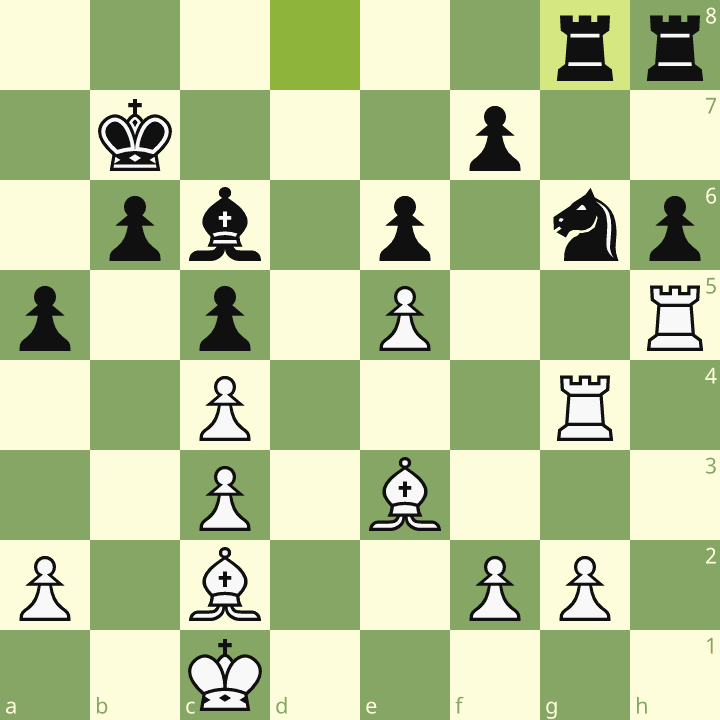
Prompt: White to play. Carlsen has a slight lead here. He fumbled it with 26. Kd2. What should he have done instead?
Several moves keep White ahead. A quiet pawn push to f3 is one of the better ones, and there are a few good bishop moves too. Almost anything is better than walking the king to d2.
https://lichess.org/study/NE5lA6gC/1FoDs3HK#50
The Fumble Returned: 26… a4
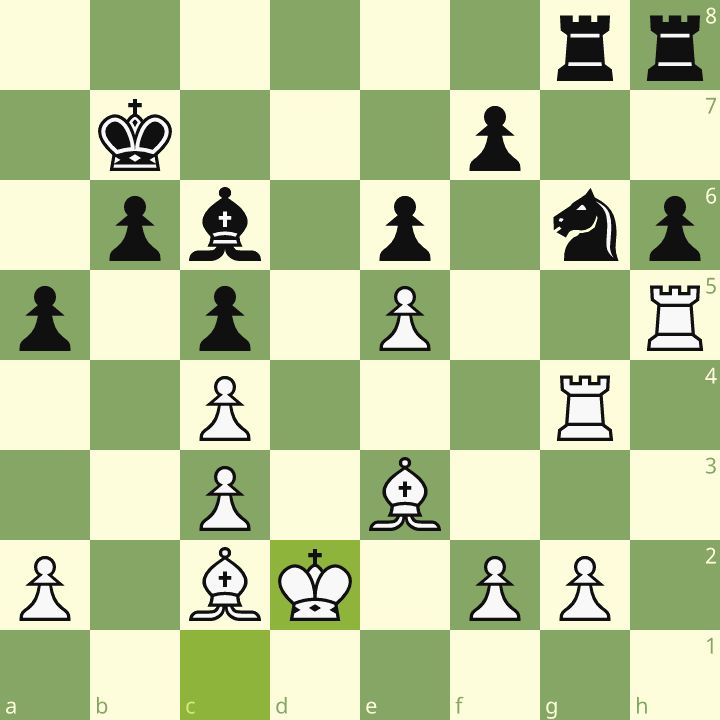
Prompt: Black to play. White just fumbled. What should Black do? Why?
Look at the Knight on g6. It’s pulled toward e5 like a magnet. If Black captures 26… Nxe5, the knight steps off the g-file and the rook on g8 suddenly attacks the rook on g4. That’s a Discovered Attack. And the knight on e5 is able to reach targets on g4 and c4 at the same time.
If White takes the rook with 27. Rxg8, Black answers 27… Nxc4+, a Fork on the king on d2 and the bishop on e3, and Black’s other rook is still there to take back on g8. White’s king walked right into it.
Anand didn’t play it. He pushed 26… a4, and Carlsen’s king stepped away to e2. One move later, the chance was gone.
https://lichess.org/study/NE5lA6gC/1FoDs3HK#51
The Skewer: 32. Be4+
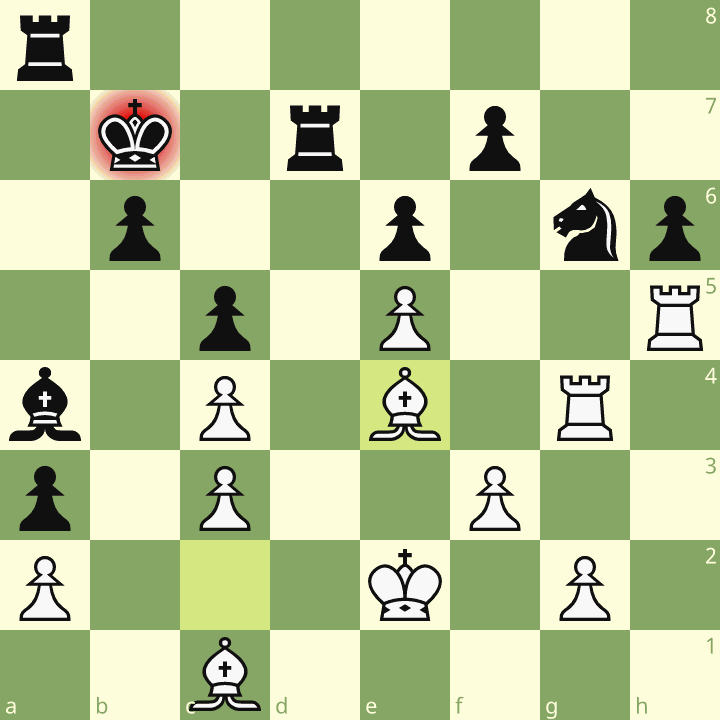
After both fumbles, the game settles back toward balance, until Carlsen finds a Skewer. His bishop checks the king on b7, and the a8 rook sits right behind it on the same diagonal. This is one of those rare moments where a skewer shows up in a game between two of the best players in the world.
Prompt: Black to play. How would you get out of check?
Anand blocked with his own bishop, 32… Bc6.
Most engines prefer 32… Ka7, even though the rook on a8 is lost. Putting your king on the edge of the board when your opponent has this much pressure feels terrible, and that feeling is exactly what makes this move hard to find.
https://lichess.org/study/NE5lA6gC/1FoDs3HK#63
Learning Resources
Patterns to Look For
When my opponent’s king moves, what can my pieces reach now that they couldn’t before?
Which of my pieces is standing in front of one of my own rooks, bishops, or queen? What happens if it moves?
What else sits on the same Rank, File, or Diagonal behind the King?
Practice
Skewer puzzles: https://lichess.org/training/skewer
Discovered attack puzzles: https://lichess.org/training/discoveredAttack
Fork puzzles: https://lichess.org/training/fork
Class study (examples + answers): https://lichess.org/study/NE5lA6gC